Build a brighter, bigger UST home theater.
ScreenSignal helps you choose the right ALR screen, understand lenticular materials, plan a 132-inch installation and avoid compatibility mistakes before you buy.
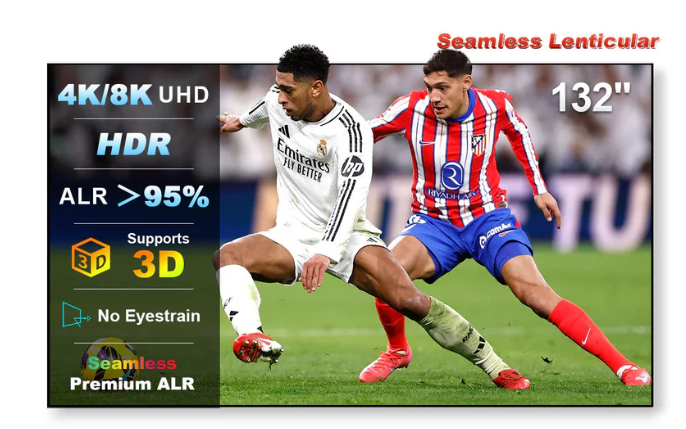
Promotional product image supplied for this site. Clicking the image opens the affiliate offer.
Three decisions before you buy a UST screen
Projector type, room light and actual wall fit determine the right screen long before a sale price does.
1. Match the projector
UST screens are directional. Confirm your projector is genuinely ultra-short throw before choosing lenticular ALR material.
Compatibility guide →2. Map the room light
Ceiling light, side windows and direct sun affect ALR performance differently. Learn what the material can realistically control.
Bright-room guide →3. Measure the full frame
A 132-inch diagonal is only the starting point. Plan the actual width, height, console and mounting clearance.
132-inch dimensions →NothingProjector 132″ Seamless Lenticular ALR Screen
The featured screen is a fixed-frame, UST-only product with a seamless 132-inch surface. The merchant lists 0.6 gain, 170° viewing angle, 95% ALR and a 10 mm frame.
Choose by use case, not by buzzword
UST Screen Buying Guide
The full decision framework for material, size, room light and installation.
Read guide →ALR without the marketing fog
What Is ALR?
How directional screen structures preserve perceived contrast in rooms that are not fully dark.
Learn ALR →Lenticular vs Fresnel
Compare two common UST screen architectures by light control, viewing angle and size.
Compare materials →Screen Gain Explained
Why 0.6 gain is not a quality score—and why it can make sense in a UST ALR design.
Understand gain →