Comparison
Lenticular vs Fresnel Screen for Ultra-Short-Throw Projectors
Lenticular and Fresnel screens both aim to preserve contrast when a projector is used outside a fully darkened theater, but they control light differently. For UST buyers, the decision is less about which technology is universally superior and more about your lighting direction, seating width and desired screen size.
Independent-guide note: Product-specific facts on this page come from published merchant information reviewed in September 2026. ScreenSignal did not independently lab-test this screen. Prices, availability and policies can change.
How lenticular UST material works
A UST lenticular screen uses microscopic horizontal structures designed around the projector’s steep upward light path. The geometry can direct projector light toward the audience while absorbing or redirecting a meaningful portion of overhead illumination. This is why UST-specific lenticular material should be installed in the correct orientation.How Fresnel material differs
Fresnel screens use concentric optical structures that manage the angle of incoming light across the surface. They can be strong performers in rooms with uncontrolled light, but their optical directionality can create a narrower ideal seating area depending on the design. Size options can also be more limited than with some flexible lenticular materials.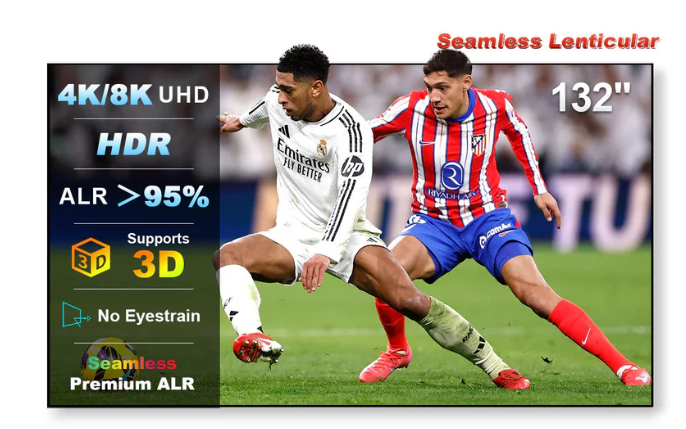
See the 132-inch NothingProjector screen
Check the current price, availability and merchant terms before you buy.
View Current OfferViewing angle
NothingProjector lists a 170° viewing angle for its 132-inch lenticular screen. Viewing-angle claims should still be interpreted as manufacturer specifications: perceived brightness and color can change as you move off-axis even when the image remains visible.Size and seamless construction
The 132-inch NothingProjector is marketed specifically around being seamless above the common 120-inch range. If you want 132 inches and a fixed frame, that can make the decision straightforward. If you are shopping around 100 to 120 inches, the choice between lenticular and Fresnel has more room-specific tradeoffs.Which should you choose?
Choose a UST lenticular screen when you want broad seating, strong overhead-light control and size flexibility. Compare Fresnel when your room benefits from its stronger directional characteristics and your required size is available. In either case, verify that the exact screen is designed for UST—not merely labeled “ALR.”
Ready to check the current offer?
Open the merchant product page through our affiliate link to confirm today’s price, stock and terms.
View Current Offer